Half-Life 2 — System Requirements, FPS Estimate & Settings
2004 · Shooter, Action · Valve Software · ESRB Mature · Metacritic 96
Official system requirements
Publisher-published Minimum / Recommended values via RAWG, retrieved 2026-08-21. Real-world performance varies with drivers, resolution and your full build.
| Spec | Minimum | Recommended |
|---|---|---|
| OS | Minimum: | — |
| Processor | OS: Windows 7, Vista, XP | — |
| Memory | Processor: 1.7 Ghz | — |
| Graphics | Memory: 512 MB RAM | — |
| Storage | Graphics: DirectX 8.1 level Graphics Card (requires support for SSE) | — |
| DirectX | Storage: 6500 MB available space | — |
Multi-GPU FPS estimate
Estimated average FPS by GPU at 1080p / 1440p / 4K, derived from Half-Life 2's demand tier (tier 5, Moderate (mainstream GPU)) and published TechPowerUp-style relative-performance indices (RTX 4090 = 100), retrieved 2026-08-29. Planning estimates, not benchmarks.
| GPU | 1080p | 1440p | 4K |
|---|---|---|---|
| RTX 4090 | 150 | 99 | 57 |
| RTX 4080 Super | 135 | 89 | 51 |
| RTX 4080 | 129 | 85 | 49 |
| RX 7900 XTX | 144 | 95 | 55 |
| RX 7900 XT | 135 | 89 | 51 |
| RTX 4070 Ti Super | 115 | 76 | 44 |
| RX 7800 XT | 115 | 76 | 44 |
| RTX 4070 Super | 108 | 71 | 41 |
| RTX 4070 | 101 | 67 | 39 |
| RX 7700 XT | 104 | 69 | 40 |
| RTX 3070 | 94 | 62 | 36 |
| RX 6800 XT | 114 | 75 | 43 |
| RTX 4060 Ti | 83 | 55 | 32 |
| RX 6700 XT | 101 | 67 | 39 |
| RTX 3060 | 76 | 50 | 29 |
| RX 6600 XT | 86 | 57 | 33 |
| RTX 2060 | 69 | 45 | 26 |
| GTX 1660 Super | 57 | 38 | 22 |
| RX 580 | 66 | 44 | 25 |
| GTX 1060 6GB | 54 | 36 | 20 |
| GTX 1650 | 43 | 28 | 16 |
| Intel Arc A770 | 88 | 58 | 33 |
| UHD 770 (integrated) | 18 | 12 | 8 |
Method: a game's demand tier maps to a “GPU index needed for ~60 FPS at 1080p”; each GPU's relative index produces an estimate via a diminishing-returns curve, then scaled for resolution. Source: TechPowerUp GPU database (relative performance), 2026-08-29.
Similar games you may tune next
Left 4 Dead 2
2009 · Shooter, Action
Open profile →BioShock Infinite
2013 · Shooter, Action
Open profile →Borderlands 2
2012 · Shooter, Action
Open profile →BioShock
2007 · Shooter, Action
Open profile →Destiny 2
2017 · Shooter, Action
Open profile →PAYDAY 2
2013 · Shooter, Action
Open profile →DOOM (2016)
2016 · Shooter, Action
Open profile →Team Fortress 2
2007 · Shooter, Action
Open profile →Optimize Half-Life 2 for your hardware
Pick your GPU, CPU, resolution and target refresh rate, then generate a printable settings card with per-preset expectations and upscaler guidance.
Optimize Half-Life 2 for your PC
This is a planning estimate derived from the game's demand tier, not a benchmark.
My Half-Life 2 Settings Card
Generated at GameFigs on 2026-09-25. Game demand tier: 5/9.
Release & version notes
Official release date: 2004-11-16. Ongoing patches and version history are published by the developer — for the latest patch notes, see the official store or support page. GameFigs summarizes the official release only and does not invent patch dates.
About Half-Life 2
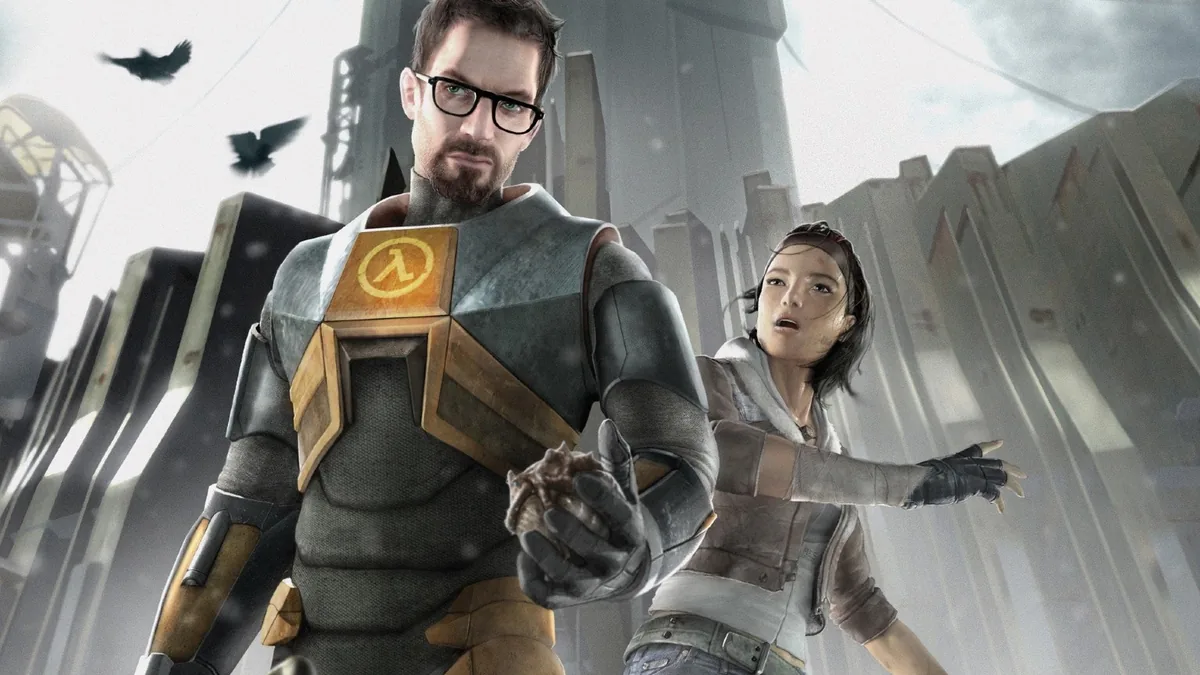
Gordon Freeman became the most popular nameless and voiceless protagonist in gaming history. He is painted as the most famous scientist and a hero within the world of Half-Life, and for a good reason. In the first game he saved the planet from alien invasion, this time, when the invasion is already begun, the world needs his help one more time. And you, as a player, will help this world to survive. This time Gordon arrives in City 17, ravaged and occupied by Combines, where he meets his old Black Mesa friends. What is different, aside from the overall design quality, is the use of Valve’s Source engine that not only expands on the fluidity of character model animations and movement but allows players to interact with a myriad of objects with the advanced and realistic (to an extent) physics. Classic Headcrab Zombies are revamped and have new variants that provide players with different threats. For a story-driven FPS, Half-Life 2 is unique in its plot delivery, and making in-game mechanics feel natural, be it platforming or driving.
Sources & attribution
- Game data (release year, genres, platforms, system requirements, description, cover art) via RAWG.io, retrieved 2026-08-21.
- GPU relative-performance indices via TechPowerUp GPU database (relative performance), retrieved 2026-08-29.
- FPS estimates on this page are GameFigs planning estimates from the demand-tier + GPU-index model — not benchmark results.
How the Half-Life 2 optimization card & FPS estimate are computed
Each game is scored on a 0–9 demand tier from its published PC requirements (and a year/genre fallback when requirements are absent). The FPS estimate compares your selected GPU's relative-performance index against the tier's required index using a diminishing-returns curve, then scales for resolution. The settings card maps the demand tier and your hardware to a starting preset, an FPS band and an upscaler recommendation. All outputs are planning guides — verify in-game with the built-in benchmark when available.
Tools for Half-Life 2
Check your hardware against this title, then set your gear up for it.