Little Nightmares — System Requirements, FPS Estimate & Settings
2017 · Platformer, Adventure, Action · BANDAI NAMCO Entertainment America · Metacritic 81
Official system requirements
Publisher-published Minimum / Recommended values via RAWG, retrieved 2026-08-21. Real-world performance varies with drivers, resolution and your full build.
| Spec | Minimum | Recommended |
|---|---|---|
| OS | Minimum: | Recommended: |
| Processor | OS: Windows 7, 64-bit | OS: Windows 7, 64-bit |
| Memory | Processor: Intel CPU Core i3 | Processor: Intel CPU Core i7 |
| Graphics | Memory: 4 GB RAM | Memory: 8 GB RAM |
| Storage | Graphics: Nvidia GTX 460 | Graphics: Nvidia GPU GeForce GTX 660 |
| DirectX | DirectX: Version 11 | DirectX: Version 11 |
| Item 7 | Network: Broadband Internet connection | Network: Broadband Internet connection |
| Item 8 | Storage: 10 GB available space | Storage: 10 GB available space |
Multi-GPU FPS estimate
Estimated average FPS by GPU at 1080p / 1440p / 4K, derived from Little Nightmares's demand tier (tier 2, Light (entry discrete GPU)) and published TechPowerUp-style relative-performance indices (RTX 4090 = 100), retrieved 2026-08-29. Planning estimates, not benchmarks.
| GPU | 1080p | 1440p | 4K |
|---|---|---|---|
| RTX 4090 | 392 | 259 | 149 |
| RTX 4080 Super | 351 | 232 | 134 |
| RTX 4080 | 338 | 223 | 128 |
| RX 7900 XTX | 375 | 248 | 143 |
| RX 7900 XT | 351 | 232 | 134 |
| RTX 4070 Ti Super | 300 | 198 | 114 |
| RX 7800 XT | 300 | 198 | 114 |
| RTX 4070 Super | 282 | 186 | 107 |
| RTX 4070 | 264 | 175 | 101 |
| RX 7700 XT | 272 | 179 | 103 |
| RTX 3070 | 247 | 163 | 94 |
| RX 6800 XT | 296 | 196 | 113 |
| RTX 4060 Ti | 217 | 143 | 83 |
| RX 6700 XT | 264 | 175 | 101 |
| RTX 3060 | 199 | 131 | 76 |
| RX 6600 XT | 225 | 148 | 85 |
| RTX 2060 | 180 | 119 | 68 |
| GTX 1660 Super | 149 | 98 | 57 |
| RX 580 | 172 | 114 | 65 |
| GTX 1060 6GB | 141 | 93 | 53 |
| GTX 1650 | 112 | 74 | 43 |
| Intel Arc A770 | 228 | 151 | 87 |
| UHD 770 (integrated) | 46 | 30 | 17 |
Method: a game's demand tier maps to a “GPU index needed for ~60 FPS at 1080p”; each GPU's relative index produces an estimate via a diminishing-returns curve, then scaled for resolution. Source: TechPowerUp GPU database (relative performance), 2026-08-29.
Similar games you may tune next
Limbo
2010 · Adventure, Action
Open profile →Batman: Arkham Asylum Game of the Year Edition
2010 · Platformer, Adventure
Open profile →INSIDE
2016 · Adventure, Action
Open profile →SEGA Mega Drive and Genesis Classics
2010 · Adventure, Action
Open profile →FEZ
2012 · Adventure, Action
Open profile →Ori and the Will of the Wisps
2020 · Platformer, Adventure
Open profile →Terraria
2011 · Platformer, Indie
Open profile →Grand Theft Auto IV
2008 · Adventure, Action
Open profile →Optimize Little Nightmares for your hardware
Pick your GPU, CPU, resolution and target refresh rate, then generate a printable settings card with per-preset expectations and upscaler guidance.
Optimize Little Nightmares for your PC
This is a planning estimate derived from the game's demand tier, not a benchmark.
My Little Nightmares Settings Card
Generated at GameFigs on 2026-09-25. Game demand tier: 2/9.
Release & version notes
Official release date: 2017-04-27. Ongoing patches and version history are published by the developer — for the latest patch notes, see the official store or support page. GameFigs summarizes the official release only and does not invent patch dates.
About Little Nightmares
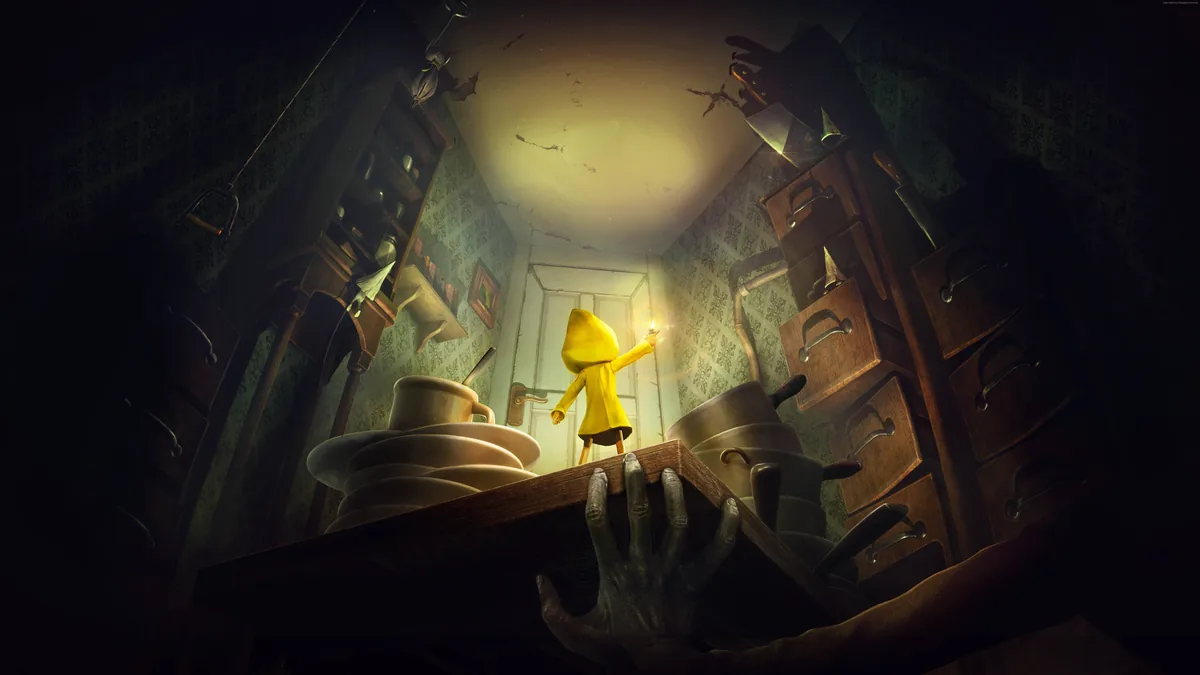
Heavily inspired by Limbo and Inside, Little Nightmares are telling a story of another lost child. Six is a starving little girl in a yellow raincoat, which is trapped in a mysterious vessel named the Maw. Players are taking control of Six’s movement, in order to help her escape the ship and dangerous inhabitants, that’s been kidnaping and preparing children to be served as a feast for the Guests. The control scheme is not including any combat moves, leaving players defenseless against any threat. Six can run, crawl, climb, push or pull, and in rare cases carry an object she can throw to stagger an enemy or solve a puzzle. The game gives players the ability to carry a lighted match at any time, inviting players to explore and search for the collectible statues. Little Nightmares have 3 DLC levels, expanding the game beyond the perspective of Six, where the Runaway Kid, a young boy, who is trying to catch up to Six and having his own adventure, going through the Maw in the extra chapters, named “The Depths”, “The Hideaway” and “The Residence.”
Sources & attribution
- Game data (release year, genres, platforms, system requirements, description, cover art) via RAWG.io, retrieved 2026-08-21.
- GPU relative-performance indices via TechPowerUp GPU database (relative performance), retrieved 2026-08-29.
- FPS estimates on this page are GameFigs planning estimates from the demand-tier + GPU-index model — not benchmark results.
How the Little Nightmares optimization card & FPS estimate are computed
Each game is scored on a 0–9 demand tier from its published PC requirements (and a year/genre fallback when requirements are absent). The FPS estimate compares your selected GPU's relative-performance index against the tier's required index using a diminishing-returns curve, then scales for resolution. The settings card maps the demand tier and your hardware to a starting preset, an FPS band and an upscaler recommendation. All outputs are planning guides — verify in-game with the built-in benchmark when available.
Tools for Little Nightmares
Check your hardware against this title, then set your gear up for it.